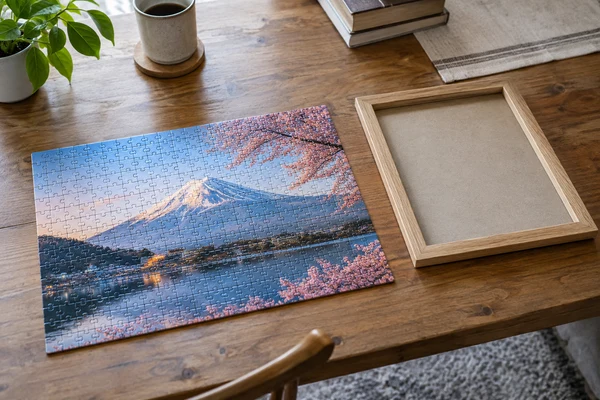
Plan puzzle framing from the completed dimensions and full display stack, not the piece count. Confirm whether a frame is supplied, sourced separately or merely shown as a display idea, then coordinate the puzzle, frame opening, depth, backing and instructions. A nominal frame size cannot establish compatibility on its own. This guide helps art-gift retailers approve a clear, practical display route and communicate exactly what customers receive.
Define whether the product includes a frame or supports later framing
A custom puzzle with frame can describe several different products: a loose puzzle sold with a matching frame, a completed display piece, or a puzzle marketed as suitable for a separately purchased frame. Define the actual contents and customer task before developing the pack. Each route has different dimensional, mounting and instruction requirements. Do not let a lifestyle photograph imply a frame is included when the quotation and component list contain only the puzzle.
A buyer should identify who supplies the frame, who approves the fit and whether any mounting materials are included. If the customer must obtain adhesive, backing or hardware separately, say so clearly in the product information. If the assembled puzzle is supplied ready for display, agree the assembly and packing scope explicitly. These are project-specific options to investigate, not a statement that every frame or mounting arrangement is a standard PuzzleZa capability.
Begin with the art-puzzle format and discuss the display route as an additional coordinated brief. A compelling reproduction does not automatically become a compatible framed product. The frame, puzzle, backing and instructions need their own approval relationship. This article focuses on dimensions, depth and display planning so gift retailers can describe a feasible product accurately rather than assume that a familiar piece count guarantees a standard picture-frame fit.
Use confirmed completed dimensions instead of count-based assumptions
Buyers asking what size is a 500 piece puzzle need the dimensions of the actual edition, not a universal answer. The same applies to what size is a 1000 piece puzzle. Count alone does not fix width, height or aspect ratio. Obtain the proposed finished dimensions and measuring convention from the supplier, then approve the customer-facing statement. Keep the retail box size separate so a listing does not accidentally describe packaging dimensions as the completed artwork.
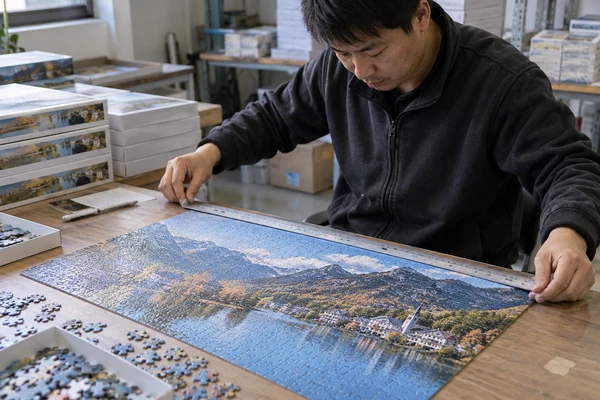
Measure an assembled representative sample on a flat surface without stretching or compressing the connections. Record orientation, units and the outer measuring points. Confirm any expected variation for the actual construction and discuss how it affects the proposed frame. A nominal dimension that looks identical to the frame's marketed size can still conceal different internal openings or insufficient clearance. Ask both component suppliers to identify their relevant measurements rather than treating a retail size label as a manufacturing drawing.
Ravensburger notes that its completed sizes are approximate. Its explanation is a reminder to confirm your own product, not a universal tolerance or PuzzleZa specification. Use a custom puzzle size guide built from the approved editions in your range. Update it when the format changes and make the information available before purchase so customers can plan assembly and display with a clear basis.
Distinguish frame opening, visible area and external frame size
A frame has several relevant dimensions. The external size describes its overall footprint; the internal recess holds the display stack; the visible opening determines what the viewer sees. Those measurements are not interchangeable. A frame may accept a puzzle backing while its front lip hides part of the outer image. Ask the frame supplier to identify the internal opening, rebate depth and visible area in the intended orientation, with units and any relevant variation.
Review the puzzle artwork against the visible opening. Important details or a printed border close to the outer edge may disappear beneath the frame lip. A frame that fits physically can therefore present the image poorly. Decide whether the design needs more visual margin, a mat arrangement or a different frame profile. Do this before approving the crop, box illustration and display photograph. Do not assume an edge-to-edge digital mockup shows how a real frame will obscure the perimeter.
If the puzzle uses a shaped outline, a conventional rectangular opening introduces another presentation choice. The completed silhouette may need surrounding space or a backing arrangement, and any fit should be reviewed as a system. Use the shaped-format guide for the broader outline discussion. Avoid describing a frame as suitable for every product in a count category. Compatibility belongs to a specific puzzle edition and an identified frame construction.
| Dimension | What it controls | Who confirms it |
|---|---|---|
| Completed puzzle size | Physical artwork envelope | Puzzle supplier and sample review |
| Frame internal opening | Space for display components | Frame supplier |
| Visible opening | Amount of image shown | Matched artwork review |
| Usable recess depth | Complete display stack | Matched physical sample |
Evaluate the complete display stack, including puzzle thickness
Custom puzzle thickness is one part of the display stack. Add any approved mounting layer, backing, mat or spacer and account for the frame's glazing and closure arrangement. A frame with suitable width and height may still lack usable depth. Ask for the proposed board thickness and variation, then review the complete stack physically. Do not infer thickness from piece count or borrow another manufacturer's stated material specification for your own product.
The Canadian Conservation Institute's framing guidance explains the importance of adequate recess depth and separating paper artwork from glazing. This is conservation guidance for works on paper, not a certification of ordinary commercial puzzles. Use the principle to discuss the proposed frame with an appropriate specialist. It does not establish that a puzzle's inks, board or mounting system are archival or preservation-grade.
Check that the frame closes normally with the agreed stack, without pressure that distorts the puzzle or forces the backing into place. Confirm how the customer will assemble the system and what components remain visible. If the frame supplier proposes a different backing, review fit and appearance again. A thinner substitute may change stability or the intended display method. Record the complete stack and component references so frame compatibility is not reduced to one thickness number on a quotation sheet.
A simple matched-fit review
Lay out the proposed components in their intended order, measure the complete stack where appropriate, then place it in the identified frame. Check normal closure and the visible image without forcing any part. Record component versions and observations. If the sample uses temporary mounting, state that limitation before approving final customer instructions.
Review a matched puzzle and frame concept
Share completed-size targets, the proposed frame and display components to discuss fit and sample requirements.
Confirm the mounting method and communicate its limits
Decide whether the puzzle will remain loose within a supported arrangement or be fixed using an approved mounting method. Ask the relevant suppliers for compatibility information for the actual printed surface and board. An adhesive may change appearance or make later disassembly impractical. Do not prescribe a generic glue or application amount without a confirmed system. A commercial puzzle intended for decorative display should not be presented as museum-grade artwork merely because it is placed in a frame.
Review the proposed method on a representative sample before writing instructions. Check the visible surface, seams, edge position and flatness after the agreed preparation. Record the method, materials and observed condition rather than making a lifetime performance claim. If a mounting component is not included, identify it as a separately selected item and explain who confirms suitability. Avoid implying that the puzzle can be lifted or hung unsupported based on a staged photograph of an assembled sample.
For long-term conservation concerns, refer the customer to a qualified framing or conservation professional rather than improvise archival assurances. The buyer's product team should distinguish decorative use from preservation claims in the listing. Practical display instructions can still be useful: identify dimensions, required components and the agreed preparation sequence. The goal is a clear, feasible customer task, with language supported by the actual reviewed system and no claim that every home adhesive or frame will produce the same result.
Give inserts a practical display role without crowding the reference
A display-oriented puzzle may need two kinds of information: an image reference for assembly and instructions for the confirmed framing route. They can share a component if the layout remains readable, but their purposes are different. Keep the approved puzzle crop in the reference and the mounting information specific to the supplied or recommended system. A promotional leaflet should not replace a useful assembly image simply because it offers more room for branding.
Specify completed dimensions, orientation and what is included in the pack. If a frame is supplied, identify the relevant model or component code in the internal record. If a frame is separate, explain that customers should check internal opening and depth rather than buy by piece count. Review the language with the person responsible for the actual mounting arrangement. Avoid generic warnings and unverified claims; give the customer the information needed to make a compatible selection or complete the supplied task.
The reference and insert guide helps plan the printed components. For a framing range, check folded dimensions and packing position alongside any backing or frame parts. Instructions can be present yet difficult to find beneath a bulky component. Open the complete sample as a customer would and verify the sequence. Keep the instructional file version linked to the physical display system so a later frame change does not leave old guidance inside new packs.
 PuzzleZa
Separate puzzle packing from the protection of frame components
If a frame is included, agree a complete packing proposal for the puzzle and every display component. Different frame materials, corners and glazing arrangements introduce their own handling needs. Ask the suppliers and logistics partner to evaluate the actual configuration for the intended route. Do not assume that a puzzle's existing carton provides suitable protection for an added frame. The pack should clearly identify how parts are separated, contained and presented when the customer opens it.
Review the complete filled pack, retail measurements and carton arrangement. Check whether the customer can remove components without disturbing loose pieces and whether any supplied hardware is controlled in the component list. Agree who verifies component counts and correct frame version. A frame pictured beside a puzzle is insufficient proof of packing feasibility. Keep packaging approval tied to the proposed materials and final stack, particularly if the edition will be shipped individually through an online fulfillment channel.
During the factory discussion, define practical checks for the puzzle and agreed packing arrangement. A separately sourced frame may require additional coordination and its own approval evidence. At shipment inspection, compare selected packs with the complete released reference, checking the agreed components and visible condition. Document the scope rather than claiming every unit has undergone a complete framing exercise. If a packing or component change is proposed, review its effect on fit and customer instructions before acceptance.
Approve a matched system and maintain a range compatibility record
Create a compatibility sheet for each approved edition and frame combination. Include puzzle artwork revision, completed dimensions, proposed thickness, frame identifier, internal opening, visible area and approved stack. Add photographs of the assembled review and note any sample limitations. This lets retail staff answer practical questions without guessing from the count or box image. Keep separate records where two editions use the same artwork at different sizes, because their display interfaces may differ.
A reorder should reference the accepted components and reviewed fit. If the puzzle dimensions, board, backing or frame construction change, update the compatibility sheet and reassess the sample as appropriate. A changed box title alone may not alert the team to a dimensional revision. Keep the product listing, size guide and insert instructions synchronized with the actual supply. This is particularly useful for an art-gift range where customers may purchase a frame long after the original puzzle order.
Submit the display brief through PuzzleZa's contact page with artwork, count, size target, frame source, quantities and destination. Identify which requirements are fixed and which can be adjusted. Ask for a proposal that makes the matched fit and packing system reviewable. The outcome may be a coordinated framed kit or clear guidance for separate framing. In either case, the customer should understand the exact product supplied and the information needed for a compatible display.
Frequently asked questions
What size frame fits a 500-piece puzzle?
Use the confirmed completed dimensions of the actual edition and the frame's internal opening, visible area and usable depth. There is no universal frame size determined by 500 pieces. Review the complete display stack on a matched sample, especially if backing, mounting or a mat is part of the system.
Does a 1,000-piece puzzle always fit a standard poster frame?
No. Dimensions and aspect ratios vary, and advertised frame sizes may not describe every relevant opening. Ask the puzzle and frame suppliers for confirmed measurements. Check the visible image and complete stack physically before describing the combination as compatible.
Can we sell a puzzle with an included frame?
Discuss it as a coordinated project and confirm sourcing, component contents, mounting method, fit and packing. The frame and accessories should appear in the quotation and approval record. Do not assume an included-frame configuration is available or show it as supplied before feasibility is confirmed.
Which adhesive should customers use for framing?
Use guidance approved for the actual puzzle and display system. Ask the relevant suppliers about compatibility and review a representative sample. Avoid prescribing a universal adhesive or claiming archival performance without evidence. If no mounting system is supplied, explain the customer's separate selection and confirmation task clearly.
What should the framing insert include?
State completed dimensions, orientation, supplied components and the confirmed preparation sequence. For separate framing, explain checking internal opening and depth. Keep the assembly reference useful and link instructions to the current display-system version. Update the insert when the frame or mounting arrangement changes.
Conclusion
A framing-ready puzzle needs a confirmed dimensional relationship and a clear customer task. Review the matched frame, complete stack and visible image, then coordinate packaging and instructions with the approved components. Accurate size information and a traceable compatibility record help an art-gift range remain credible as editions and suppliers change.
Prepare an art-puzzle display brief
Send artwork, quantities, destination and frame-sourcing details for a coordinated feasibility and quotation discussion.
Sources and scope
Sources reviewed on 2026-10-09. Manufacturing examples and review checklists are planning guidance, not claims about completed customer projects or guaranteed results. AI-generated images illustrate the topic and do not document an actual inspection.
- Ravensburger puzzle FAQ — Manufacturer-specific examples showing why count and dimensions need confirmation.
- Canadian Conservation Institute framing guidance — General framing principles concerning stack depth and separation from glazing.