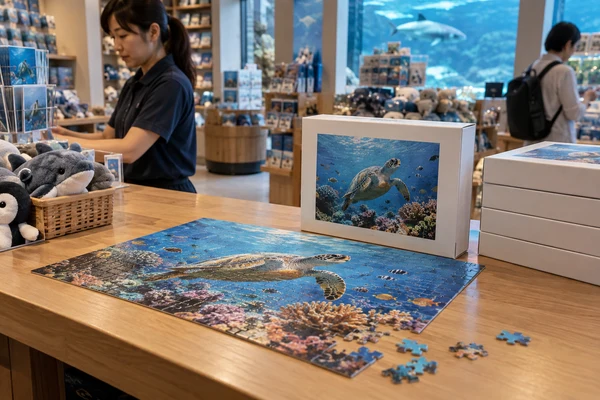
A custom puzzle for zoo retail should connect a recognisable visitor experience with an enjoyable image and accurate supporting information. Aquarium and theme park ranges follow the same principle, but the right subject, audience and product claims differ. Begin with what visitors should remember, who will use the puzzle and how the shop will present it. Then develop the artwork, format, reference material and retail pack together. This guide is for attraction buyers, education teams and souvenir distributors making a venue-specific product; it explains how to turn a memorable attraction into a coherent puzzle without overstating educational outcomes or assuming that familiar imagery is available for commercial use.
Define the visitor memory the puzzle should carry home
Choose one central idea: a signature habitat, an animal encounter, an illustrated venue landscape or a character-led attraction. A collage of every exhibit may seem comprehensive but can obscure the subject that visitors actually recognise. Ask the education and retail teams to agree on a one-sentence promise. The completed image should fulfil that promise without requiring the customer to read a long box explanation first.
For a custom puzzle for aquarium retail, an underwater scene can evoke a specific exhibit while keeping the imagery clearly identified as an illustration. For a zoo, a habitat grouping can connect animals with their environment. For a theme park, an original illustrated map can celebrate the visit. These are hypothetical creative directions, not claims that any venue has commissioned or approved a particular product.
Distinguish a souvenir from a lesson. A recognisable picture can be enough for a gift item; an education-led product needs a defined learning purpose and supporting content. Review the educational puzzle format when a guide or answer card is central to the experience. Do not describe every animal image as an educational resource simply because it includes species names. Explain what the user can actually do or discover.
Match the format to families, enthusiasts and gift buyers
An attraction shop serves several purchasing situations. A family may want an approachable activity after a visit; an adult enthusiast may want detailed artwork; a visitor travelling with limited luggage may prioritise a compact pack. These are useful planning segments, not measured customer proportions. Choose which segment the first product serves and define what makes it suitable before adding more formats.
Custom puzzles for souvenir shops need a clear relationship between finished size, piece format and pack dimensions. A small retail box does not necessarily mean a small assembled puzzle. State both dimensions in the brief and examine the actual sample. A larger illustrated range can suit an adult audience, while a simpler composition may better support family discussion. Avoid using piece count as the only indicator of age suitability.
A buyer searching for 'custom puzzle for children museum' options is usually developing a children's museum activity or gift range. Establish the intended age range, activity setting and market requirements before making a children's product claim. The U.S. Consumer Product Safety Commission's toy-safety guidance is relevant to applicable U.S. products, but it does not certify a proposed puzzle. Have qualified specialists determine the requirements for the actual construction and destination.
| Visitor need | Product direction | Sample question |
|---|---|---|
| Family activity | Clear illustrated scene and supporting prompts | Can the intended users identify useful image regions? |
| Adult art souvenir | Detailed habitat or venue artwork | Does detail remain useful at the chosen scale? |
| Portable travel gift | Compact presentation with a readable reference | Does the complete pack fit the intended retail space? |
| Learning extension | Defined topic with an accurate guide | Does the activity support the stated learning purpose? |
Review animal and habitat content before illustration approval
Create a content register with the subject name, source, intended label and responsible reviewer. Confirm anatomy, distinguishing markings and habitat context where those details matter to the learning goal. Stylised art can simplify an animal without becoming misleading, but the team should consciously decide what is simplified. A creative designer should not have to resolve scientific disagreements after the print file has already been released.
For ocean-themed content, NOAA's ocean-literacy resources provide an established educational framework. Use authoritative material to support the chosen topic, then have the attraction's subject specialist review the product-specific interpretation. The framework is a resource, not an endorsement of a commercial puzzle. Avoid turning a broad educational principle into an unsupported claim that a particular product improves learning outcomes.
Consider what the picture implies as well as what the labels say. Animals placed together may appear to share a habitat; similarly sized illustrations may imply similar real-world size. If the scene is a decorative collection rather than a natural habitat, explain that on the supporting card. Keep important facts on a readable component rather than fitting tiny paragraphs across puzzle pieces. This allows a visually enjoyable image and accurate information to serve different jobs.
Keep changing information on a controlled component
Review conservation status, exhibit names and programme details when they are used. Record the review date and source rather than implying that a printed statement will remain current indefinitely. Where updates are likely, a replaceable information card may be easier to revise than the main puzzle image. Confirm any such change in the component record before a repeat order.
Make a custom museum education puzzle useful after opening
A custom museum education puzzle works best when the learning activity is small enough to explain clearly. Ask users to find several adaptations, compare two habitats or connect an illustrated feature with a short explanation. A checklist of observable tasks is easier to evaluate than a vague promise to inspire every child. Keep the activity appropriate to the intended audience and the information the image actually contains.
Write prompts that remain meaningful when the puzzle is complete. For example, an illustrated reef scene might invite users to identify a sheltering animal and explain how the artwork shows its hiding place. Make clear where the answer comes from: the picture, a card or a separate resource. Do not demand knowledge that was never supplied, and do not present a simplified illustration as a photograph of a real exhibit.
Separate a reference image from an answer key where that helps the activity. The reference supports assembly; the answer card supports discussion. Test whether both are needed by opening a prototype with the intended activity instructions. Revisit NOAA's educational principles when checking the topic, while retaining local educator approval for the wording. The product's benefit should be described as an opportunity for an activity, not a guaranteed educational result.
Develop your visitor-retail brief
Share your venue theme, audience, artwork status, learning purpose and shop requirements. We can discuss an appropriate format and sample scope.
Approve venue identity, characters and photographs separately
A custom puzzle for theme park merchandising may involve a venue logo, character, commissioned illustration, photograph and attraction name in one composition. List these assets individually and identify the relevant permissions. Approval to use an image in a brochure should not be assumed to cover manufactured merchandise, packaging or online advertising. Ask the responsible rights holder and commercial team to confirm the proposed uses before final layout.
The World Intellectual Property Organization's copyright guidance explains permission and protected works in general terms. It supports checking the intended use; it does not establish that a specific attraction image is cleared. Keep any licence or approval record with the final artwork and have qualified advisers resolve uncertainty. The factory needs released files and clear instructions, not an unresolved discussion about which contributor owns them.
Review credits, permitted alterations and approval obligations alongside the art. An artist may allow cropping but require a particular attribution; a character owner may need to approve the reference poster as well as the puzzle. Confirm territory, sales channels and relevant duration where the arrangement specifies them. Avoid placing official, exclusive or endorsed language on the box unless the responsible party has substantiated that wording for the product.
Design the retail pack around the actual shop environment
Measure the proposed shelf, display table or hanging area before selecting a box direction. Attraction shops may need compact assortment presentations, but the actual venue's plan should decide the dimensions. Show the main subject clearly on the front and put practical information where a shopper can find it. Include the finished format, component description and approved audience guidance without overcrowding the visual hierarchy.
For multilingual retail, decide which text belongs on the shared pack and which belongs on a market-specific insert. Have native reviewers check approved translations against the same source copy. Scientific names and attraction names need consistent treatment across components. A short correct explanation is more useful than several dense languages in lettering too small to read on the physical sample.
Open, unpack and repack the proposed unit. Check whether the reference card stays flat enough to use, the puzzle bag sits cleanly and the box closes without pressing on folded material. The puzzle-packaging guide covers the wider pack system; here, connect it to the visitor's journey from shop to home. If the product is intended for an activity table, include table-space and component-handling needs in installation preparation.
Use one complete sample review for retail and education teams
A representative sample should include the approved artwork, intended construction, box and every supporting component. Have the retail buyer evaluate display and pack clarity while the educator checks subject accuracy and activity instructions. Consolidate the comments before returning them to the factory. Conflicting instructions such as removing labels for visual simplicity and adding labels for learning need a buyer decision, not an improvised production change.
During factory testing, agreed observations can cover print, cut, piece separation, component matching and pack fit. Compare selected units with the approved physical reference and content versions. For a children's range, this visual review remains separate from the applicable compliance assessment. Refer to CPSC guidance when planning relevant U.S. obligations, and confirm the actual route with the responsible specialist.
At shipment inspection, check selected finished packs for the correct animal or venue edition, reference card, language, box and visible condition. Record any discrepancy against the release reference. A matching box alone cannot prove that the correct leaflet is inside. Retain the resulting observations and sample identifiers so a later reorder or customer question can be traced to the actual product configuration.
- Retail and education reviewers approved the same artwork version.
- Rights, credits and customer-facing claims have an identified owner.
- Component count and language versions are unambiguous.
- Physical review and any required compliance work are documented separately.
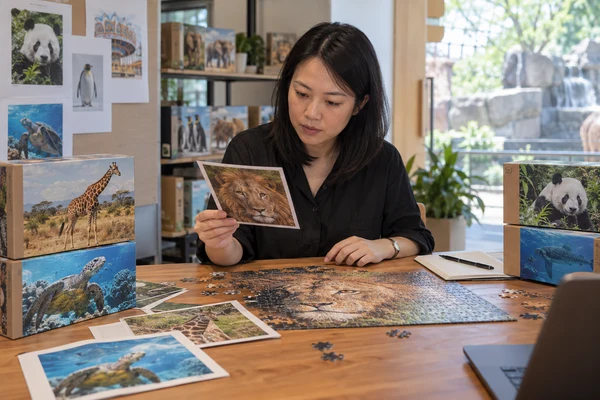
 PuzzleZa
Prepare receiving, replenishment and future content updates
Map quantities to the actual receiving locations, whether a central warehouse supplies several shops or cartons go directly to individual attractions. Give the factory the approved product identifiers, carton configuration and destination marks before packing begins. Keep mixed editions distinguishable through codes and visual references. A receiver should not need knowledge of the animal artwork to identify which SKU belongs on which shelf.
Review product identification when an edition changes. GS1 explains the role of GTINs in identifying trade items; use the applicable rules and retailer requirements for the actual change. An internal SKU and a retail identifier have related but distinct roles. Do not silently reuse an old component code when an educational card, language or consumer-facing specification has changed.
Before a repeat season, check whether exhibits, subject information, rights or pack copy need updating. Use receiving observations and actual visitor feedback where available, without inventing sales evidence to justify the range. Bring the revised brief to PuzzleZa's Shenzhen factory discussion. A controlled product record lets the buyer retain a useful format while deliberately refreshing the venue content that visitors will take home.
For an initial enquiry, send the theme, intended audience, proposed artwork and component direction through the contact page. Indicate which content has already been approved and which still needs a specialist review. This makes unresolved animal labels, language versions or licensing decisions visible at the beginning. The resulting discussion can focus on a feasible product and sample scope without treating a preliminary creative concept as final production artwork.
Frequently asked questions
What makes a zoo puzzle more useful than a generic animal puzzle?
A venue-specific product connects a recognisable visitor memory with accurate, approved content and a suitable assembly experience. That may involve a habitat, signature subject or carefully defined activity. The difference should be visible in the artwork and supporting material, rather than relying only on a venue logo on the box.
Should aquarium puzzles include scientific labels?
Include labels where they support the intended audience and activity. Keep them readable and have a subject specialist approve the names and context. A separate card may be more practical than tiny text across pieces. An illustrated scene should also make clear whether it represents a real habitat or a decorative collection.
Can one attraction puzzle serve children and adult enthusiasts?
Possibly, but define the intended users and test the actual format before making broad claims. Piece size, image complexity, supporting instructions and destination requirements matter together. A more focused assortment may serve the audiences better than one product described vaguely as suitable for everyone, especially where children's product obligations apply.
Who should approve a theme park's puzzle artwork?
The buyer should identify the owners of venue identity, characters, photographs and illustrations, then follow the required approval path. Retail, education and creative reviewers may all contribute. Consolidate their decisions into one released file package, with permitted uses and credits confirmed by the responsible rights holders and advisers where necessary.
What should be reviewed before souvenir-shop inventory ships?
Compare selected completed packs with the approved artwork and component record. Check edition, language, reference material, box, visible condition and agreed carton marks. Give receiving teams clear SKU and location information. Preserve inspection observations so a content update or repeat order can use the same traceable product reference.
Conclusion
A custom puzzle for zoo, aquarium or theme park retail should make the visit recognisable, the activity enjoyable and the information trustworthy. Align audience, artwork, rights and supporting components before sampling. Approve a complete pack with both retail and education reviewers, then retain the product record for receiving and thoughtful future updates.
Plan an attraction-specific puzzle range
Send PuzzleZa your approved content direction, quantity scenarios and receiving needs at info@PuzzleZa.com, or contact us through the enquiry page.
Sources and scope
Sources reviewed on 2026-09-28. Manufacturing examples and review checklists are planning guidance, not claims about completed customer projects or guaranteed results. AI-generated images illustrate the topic and do not document an actual inspection.
- NOAA: ocean and climate literacy — An authoritative educational framework for ocean-themed content review.
- U.S. Consumer Product Safety Commission: toy-safety business guidance — Why applicable children's product requirements need a separate compliance assessment.
- World Intellectual Property Organization: copyright questions — Checking permissions for artwork, photographs and commercial product uses.
- GS1: Global Trade Item Number — Trade-item identification for retail and receiving records.