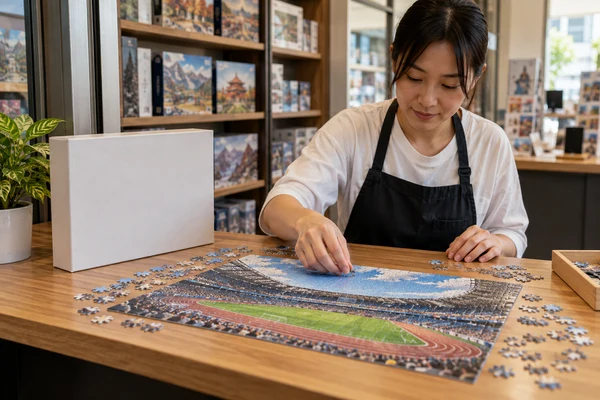
A custom puzzle for sports team merchandise should begin with authorised artwork, a clear product role and a realistic event-delivery plan. Festival ranges need the same controls, with extra attention to changing lineups and date-sensitive copy. Decide what can remain useful after the event, what requires rights-holder approval and which deadlines are supported by the actual production and transport plan. This guide helps merchandise buyers, event organisers and promotional agencies develop a puzzle customers can recognise and keep. The examples are planning scenarios; PuzzleZa does not claim a licence for any team, performer, festival or venue mentioned by a buyer.
What should a custom puzzle for sports team merchandise do?
Define whether the product is sold as fan merchandise, included in a hospitality gift or distributed as part of a campaign. These uses lead to different expectations for image complexity, pack presentation and supporting copy. A keepsake can celebrate an enduring venue or visual identity; a campaign item may need to direct the recipient to a specific next action. Write that role before choosing a format.
A hypothetical stadium illustration can support a longer-lived range, while a tournament-date design commits the pack to a particular moment. Neither direction is inherently better. The choice depends on rights, audience, channel and tolerance for leftover stock. Compare the two through their actual implications rather than assuming that a dated edition will sell faster or command a premium.
For a custom puzzle for music festival merchandise, decide whether customers should remember the setting, the artwork or the performer programme. An original landscape can retain meaning if the lineup changes; a performer-led composition may require more permissions and revisions. The promotional puzzle kit provides a starting format for discussion. Confirm the construction and component requirements for the specific event instead of treating a format name as a ready-made licensed product.
Create an asset and approval register before design release
List each asset: club crest, event name, venue illustration, performer photograph, portrait, sponsor logo and commissioned artwork. Record the source, responsible rights holder, proposed use and approval route. A single design may combine several rights and approval obligations. Do not assume that an organiser's permission covers every photograph or that a sponsorship relationship authorises manufacture of unrelated merchandise.
The World Intellectual Property Organization describes the role of trademarks in sports branding and merchandising. That is a reason to review permissions carefully, not evidence that a particular team name is available for use. Ask the responsible commercial and legal teams to confirm territories, channels, product category and duration where relevant. Keep the approved wording and asset versions linked to the project.
Separate legal permission from visual approval. A licence may allow the product category while still requiring review of each pack face or marketing image. Record who approves those items and how comments will be consolidated. Use the artwork-licensing guide as an operational checklist, then resolve actual rights questions with the relevant owner or adviser. The factory should receive released instructions rather than decide which competing interpretation of a licence is correct.
| Asset | Scope to confirm | Release evidence |
|---|---|---|
| Team or event identity | Product, territory and channel | Authorised asset and permitted-use record |
| Photography or illustration | Reproduction, crop and printed components | Permission and approved version |
| Sponsor identity | Placement and current relationship | Approved layout and copy |
| Performer or person imagery | Relevant image and publicity permissions | Responsible rights review |
Separate durable artwork from changing event information
Identify the elements most likely to change before production: dates, venue entrances, schedules, sponsor hierarchy, performer lists and campaign destinations. Decide whether those details belong on the puzzle, box or a separately controlled card. A stable puzzle image with an event-specific insert can reduce the number of printed components affected by a correction, although the proposed packing arrangement still needs approval.
For a custom puzzle for brand activation, give the main image enough visual interest to function as a puzzle. An oversized logo on a flat background may communicate the brand clearly while giving the assembler few landmarks. An original illustrated scene can incorporate identity more naturally. Keep essential campaign instructions on a readable component, especially if a website destination or redemption period might change.
Treat copyright permissions for adapted work separately from event facts. WIPO's copyright questions explain why use of protected works may require permission. Confirm whether cropping, combining photographs or changing colours is allowed for the specific assets. Do not assume that making a collage removes the need for authorisation. Preserve an unmodified approved source so any requested correction can be traced to the right file.
Choose the pack around sales, handouts and recipient use
A retail merchandise box needs clear product information and a useful shelf presentation. A hospitality gift may prioritise the opening sequence and message. A handout needs a format that recipients can carry and use later. These requirements can conflict, so do not approve one generic pack before the distribution team has explained how the product will reach the customer.
A custom trade show puzzle may be one part of a larger booth kit. Confirm whether visitors receive it individually or sales staff send it after a conversation. A custom conference puzzle may carry event artwork and a separate information card. In both cases, distinguish the souvenir image from essential contact or access information. If a QR code is used, test the actual printed code and current destination rather than relying on the digital layout.
Map the components and handling sequence. Specify the puzzle, bag, reference image, message card and box, then review the complete pack. A bulky premium pack may be unsuitable for a visitor who is travelling with limited space; a compact pack may still need a clear reference image. Compare the options through a sample in the intended use setting. The useful decision is which construction supports the event's distribution job, not which looks most impressive in isolation.
Prepare the event display as part of the brief
For installation preparation, record the merchandise counter or activity-table space, display orientation and how staff will open demonstration units. Keep a demonstration sample separate from saleable stock. State whether the box must remain visible while the assembled image is shown; this can affect how the main visual and product information are arranged on the pack.
Review your event-puzzle scope
Share the product role, artwork approval status, event constraints and receiving location. We can discuss format and sample requirements around your current plan.
Build a delivery plan from dependencies and decision dates
Work backwards from the date the receiving team needs usable inventory, not just the public event date. Include warehouse receiving, allocation, display preparation and any onward transport. Then map rights approval, artwork release, sample review, production release, packing, inspection and freight handover. Ask each responsible party for current information; do not insert a standard manufacturing or transit duration into a live launch promise.
Identify which approvals can proceed together and which depend on a prior decision. Box dimensions may depend on the complete component list; a final printed proof may depend on approved artwork. A late change to a performer list can affect several components at once. The lead-time and shipping guide helps structure the handover, but the actual event plan must reflect this order's confirmed scope and transport arrangement.
Assign a decision owner to each possible delay. If rights approval is still open at the planned release date, who decides whether to simplify the design or postpone the order? If freight availability changes, who evaluates the commercial options? A calendar alone cannot answer those questions. Keep unknown dates visibly unconfirmed and update the launch commitment when new information arrives. A supplier discussion should resolve the dependencies rather than promise certainty that the current facts do not support.
Decide what happens if the event or arrival date changes
Agree the contingency before manufacturing dated stock. Options might include an evergreen image, postponing release, using the product through an approved later channel or revising an event insert before packing. These are choices to evaluate with the buyer and rights holder, not guarantees that changes remain possible at every stage. Once material has been printed, a revised digital file does not alter the physical inventory.
Consider cancellation, venue change and lineup change separately. A commemorative artwork can remain accurate after a schedule shift, while a printed promise about a performer may become wrong. Check the permission and consumer-facing wording before deciding to sell leftover units elsewhere. Expired promotional offers, event-access statements and claimed endorsements should not remain in the pack simply because the puzzle itself is still usable.
Define an honest stock disposition plan. Identify which units can continue as ordinary merchandise, which need a controlled component change and which should be withheld. Do not rely on an unplanned clearance sale to solve a rights problem. Keep each decision linked to the relevant asset approval. WIPO's sports-branding discussion reinforces why authenticity and authorised association matter when products carry event or team identity.
Sample the merchandise and inspect the destination configuration
Review a complete sample with creative, commercial and event-operations representatives. Check the main image, authorised marks, dates, component copy and physical pack. Examine text at actual size and verify any digital destination from the printed sample. Record which approver owns each observation, then consolidate the release into one file set. A legal approval and a visually attractive rendering do not replace physical pack review.
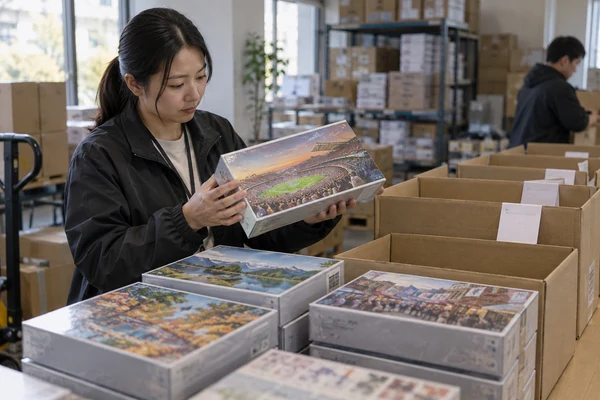
During factory testing, selected units can be compared with the approved artwork, cut, bag, box and inserts. At shipment inspection, add the event-specific checks: correct edition, destination allocation, language or sponsor version, carton count and agreed marks. Retain the observed samples and decisions. The inspection scope should describe what was checked instead of implying that every possible rights, transport or customer-use issue has been resolved.
For date-led promotional changes, consult the applicable identification rules. GS1 distinguishes time-critical promotional changes and higher-level packaging identification. Apply the relevant rule to the actual product and packaging hierarchy with the trading partner. Do not assume every event pack requires the same identifier treatment. Align the resulting codes with carton records and receiving instructions before labels are printed.
- The released edition has an approved rights and artwork record.
- Event dates and digital destinations are checked on the physical sample.
- Carton allocations match the receiving locations and versions.
- The buyer has a documented decision path for a missed event deadline.
 PuzzleZa
Prepare a reusable brief without overstating campaign results
A custom marketing puzzle brief should state the audience, product role, approved identity, artwork status, quantity scenarios, component list and receiving deadline. Add the named location, delivery basis and responsible logistics contact. State which information remains provisional. A factory can discuss feasibility more usefully when it knows the actual event constraints than when it receives only a logo and a requested arrival date.
After the event, retain available receiving observations and real feedback about image, pack and handling. Distinguish what staff observed from what customers reported, and avoid presenting a giveaway as evidence of engagement or sales uplift without measurement. If the next edition changes the event information but keeps the format, review rights and component versions again. An approved first edition does not automatically authorise every future campaign.
Bring the complete brief through PuzzleZa's enquiry page and discuss the manufacturing scope. A useful product can celebrate a sporting or cultural moment without relying on unsupported performance claims. The strongest order preparation is a clear picture of what recipients receive, what the brand is permitted to print and how the inventory will be handled if the event plan changes.
Review the factory capability and project handover against the product you are actually commissioning. Ask which sample will establish the pack reference and which information is needed before the production proposal can be confirmed. Keep the event's commercial urgency separate from technical approval: an approaching date does not make an unresolved asset or inaccurate printed statement acceptable. A clear release owner can decide whether to change scope while a practical alternative remains available.
Frequently asked questions
Can we print a favourite team's logo on a puzzle?
Confirm permission with the relevant rights holder before producing merchandise. A logo's public visibility does not establish a right to reproduce it on products. The approval may need to cover the puzzle, packaging, reference material and promotional images, with territory and channel restrictions reviewed by the responsible commercial or legal team.
Should a festival puzzle include the complete performer lineup?
Only when the lineup, permissions and approval timing support it. A changing programme creates correction and leftover-stock risks. Consider keeping durable festival imagery on the puzzle and controlled event information on a separate component. Confirm that the resulting product still tells a clear story and that every relevant printed asset is authorised.
How should we choose a delivery deadline for event merchandise?
Start with when the receiving team needs inventory for allocation and display preparation. Map approvals, sampling, production, inspection and confirmed freight dependencies backwards from that date. Keep unconfirmed stages visible. Do not turn an assumed manufacturing duration or generic transit estimate into a promise that an event order will arrive on time.
Can leftover event puzzles be sold after the event?
Check the rights, printed claims and product condition before deciding. Evergreen artwork may remain useful, while expired offers or inaccurate event details can require a controlled correction or withholding stock. The buyer and relevant rights holder should approve the route; the existence of unsold inventory does not create new permission to sell it.
What should an event-merchandise sample include?
Include the intended puzzle construction, box, bag, reference image and event-specific cards or labels. Check authorised marks, dates, copy, digital destinations, component fit and presentation. Bring creative and operations reviewers into one consolidated approval, then retain the exact file and sample versions used for production and shipment checks.
Conclusion
A custom puzzle for sports team or festival merchandise succeeds as a planning project when authorised artwork, product purpose and event logistics are aligned. Keep changing information controlled, approve the complete pack and define a realistic contingency before producing dated inventory. Retain the rights and release records for every future edition.
Start an authorised merchandise brief
Contact PuzzleZa at info@PuzzleZa.com with approved artwork, quantity scenarios, component needs and your target receiving date, or use the enquiry page.
Sources and scope
Sources reviewed on 2026-09-28. Manufacturing examples and review checklists are planning guidance, not claims about completed customer projects or guaranteed results. AI-generated images illustrate the topic and do not document an actual inspection.
- World Intellectual Property Organization: sport and branding — Trademark, merchandising and authorised association considerations in sports products.
- World Intellectual Property Organization: copyright questions — Permission review for protected images and adapted artwork.
- GS1: time-critical or promotional products — Identification review for date-specific promotional packaging changes.