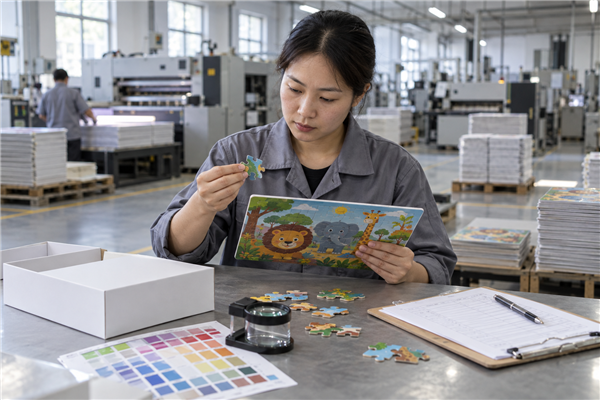
A children’s custom puzzle should be specified as a product system: the puzzle board, printed surface, piece size, bag, box, instructions and warnings can all affect the review plan. A factory can support artwork preparation, samples and production controls, but the importer or brand owner still needs to define the intended age, market and product claims early. This guide helps B2B buyers prepare a practical evidence trail for a children’s puzzle program. It is not legal advice or a substitute for a qualified laboratory, importer or compliance professional in the destination market.
Start with a decision-ready project brief
Begin with product classification and the commercial use case. State whether the puzzle is intended for children, the claimed age range, the markets where it will be sold, the material construction, whether any components can detach, and every element supplied in the pack. Share the actual sales copy and packaging artwork, not only the main image. Those details influence which requirements may apply and what a laboratory or responsible compliance adviser needs to evaluate. For a U.S. launch, the CPSC explains that the domestic manufacturer or importer is responsible for identifying the applicable portions of the toy standard. The equivalent review for other destinations also depends on the product as marketed, so a generic certificate from an unrelated item is not reliable evidence for a new SKU.
A practical brief also makes comparisons fair. Give potential suppliers the same core information and ask them to identify assumptions rather than silently filling gaps. This keeps commercial choices visible: which part of the specification creates customer value, which detail is driven by the sales channel, and which item needs a decision from your team. It also gives the factory a usable starting point for installation preparation, prepress review and packing planning.
What a buyer should define before requesting a quote
- Target customer, sales channel, destination market and launch milestone.
- Quantity scenario, finished size, proposed piece count and product application.
- Artwork status, ownership or licensing position, and every planned printed component.
- Packaging direction, inserts, barcode or label needs, and any retailer routing requirements.
- Sample approvers, required factory testing, shipment inspection and freight handover owner.
Buyer checkpoints for this decision
- The intended age range, sales markets and product claims are fixed before a testing scope is requested.
- The test provider reviews the actual construction, components, artwork and packaging instead of an informal product description.
- The approved sample, bill of materials and packaging version are controlled together so the tested product can be traced to production.
- Warnings, labels and market documentation are assigned to the responsible brand, importer and compliance owners before release.
A useful compliance file distinguishes three activities: design review, formal assessment or testing by the appropriate provider, and production verification against the approved version. Mixing those steps makes it difficult to know whether a report applies to the actual product that was shipped.
Choose the product around the customer experience
Treat testing as part of product development rather than a stamp applied after the box is printed. A simple cardboard jigsaw may have a different review path from a set with magnets, markers, electronic features or small accessory pieces. The exact requirements and accepted test methods depend on the destination and the product’s design, construction and claims. Ask a qualified test provider to explain the relevant scope in writing. Then compare its plan to the approved bill of materials, artwork and packaging. This gives purchasing teams a clear way to compare quotations: not simply by the number of test lines offered, but by whether the proposed work actually matches the product that will be supplied.
When comparing options, ask what changes for the person who receives the product. A specification should have a visible reason: perhaps it protects detailed art, makes an educational activity clearer, supports a gift-worthy unboxing sequence or fits a retailer's shelf. This discipline prevents a common sourcing error in which individual choices look attractive on their own but do not form a coherent customer experience when packed together.
It is also useful to make trade-offs explicit. A more complex format may affect development work, component control or logistics. A simplified pack may improve fulfilment but leave less room for story content. Neither result is inherently right or wrong. The value of a B2B manufacturer conversation is that product, creative and operational implications can be reviewed together while the option is still affordable to change.
Common sourcing risk to avoid
Do not make a children’s puzzle ‘compliant’ by copying a test report, age marking or warning from a different product. A change to board, ink, coating, piece size, accessory, artwork claim or supplied pack component can change the evidence that needs review.
Classify the puzzle before you ask for a test quotation
The word ‘puzzle’ is too broad for a dependable testing brief. Start with the product the customer will receive: a flat board puzzle, a boxed multi-piece jigsaw, a wooden format, a floor puzzle or a kit that includes extra accessories. Confirm whether the product is designed, manufactured or marketed as a plaything for children and which age group the brand intends to address. Product claims, imagery, age grading and use instructions all belong in the review file because they help describe the intended product application.
Next, create a component map. Include the puzzle board or substrate, printed or coated surface, inks, adhesives where relevant, inner bag, poster, instruction sheet, outer box, protective wrap and every non-paper component. Ask the supplier to identify the construction consistently, but do not ask them to determine legal obligations for a market they do not control. The responsible brand or importer should confirm the destination path with a qualified adviser or test provider.
A scope-first approach prevents wasted work. If a proposed product uses only a conventional cardboard puzzle and a paper box, it should not be quoted as though it contains unrelated features. Conversely, if the pack includes magnets, a small collectible part, a marker or a battery feature, that fact should be clear before the factory prepares a sample. A transparent scope lets buyers compare quotations on evidence rather than on vague assurances.
- Age range and the exact wording of claims shown on the product listing and pack.
- Every component and material that the end customer receives.
- Target sales countries, languages, distribution channels and importer identity.
- Any variation between SKUs, including a personalized or promotional version.
Connect materials, artwork and warnings to the approved sample
Child safe custom puzzle materials are not a marketing adjective; they are a controlled specification. The buyer should request a clear bill of materials and make sure the physical sample represents the intended production version. For printed paperboard products, that means avoiding informal substitutions to board grade, coating, ink system, bag or packaging after the sample has been reviewed. If a change is necessary, record it and ask the responsible testing or compliance party whether the existing evidence remains applicable.
Artwork matters because it can change how the product is marketed and how it is used. Review the front, back, side panels, instructions and e-commerce copy together. Use a managed artwork approval that shows date, SKU, revision and market language. The result should be a clean release file—not a collection of screenshots and separate email comments. This file allows a factory’s prepress and packing teams to use the same version that the buyer has approved.
A custom puzzle warning label should never be added as decorative copy at the last minute. Its presence, wording, placement and language should follow the market review for the precise product. As one practical example, UK guidance states that warnings should be preceded by ‘Warning’ or ‘Warnings’ and presented on the toy, a label, packaging or accompanying instructions as appropriate. Buyers should verify the current destination requirements with the relevant responsible party rather than relying on an article for final wording.
Use testing, factory checks and shipment inspection for different jobs
Formal testing or assessment is designed to address the applicable requirements for the defined product and market. Factory testing is a production-control activity: it helps the team compare printed output, die cutting, components and packing with the approved reference. Shipment inspection is a release-stage check on selected finished goods. Each is useful, but none should be presented as a substitute for another. This distinction is particularly important when teams work across a brand office, an overseas factory, a laboratory and a freight provider.
Plan the timeline backwards from the delivery target. Allow time for the product brief, artwork preparation, sample review, any required testing or document review, purchase-order release, production, factory testing, shipment inspection, export packing and freight handover. A lab report that arrives after cartons have been booked may not solve a scope or labeling issue discovered at that stage. Early preparation is normally more controllable than a rushed correction.
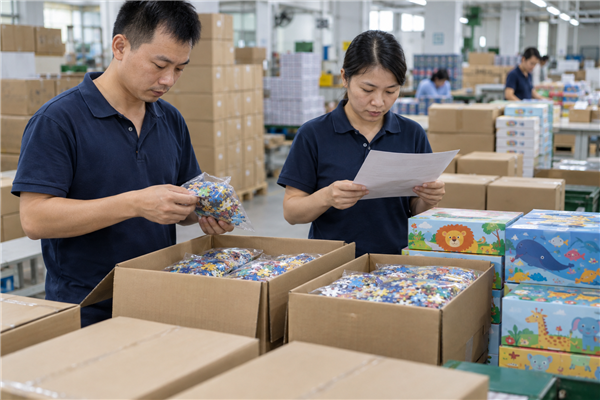
At final inspection, compare the sampled unit to the master approval: correct puzzle artwork, board and finish; cleanly cut pieces; correct bag and insert; correct retail box and warnings; and appropriate cartons and shipping marks. Record observations objectively. If a discrepancy is found, pause release until the buyer and responsible parties decide the corrective action. That is more credible than treating an inspection checklist as a promise that every legal obligation has been satisfied.
 PuzzleZa
Use the sample as evidence, not as a formality
Build the sample and quality plan around the same controlled product record. Before mass production, review the puzzle’s board, printed artwork, cut pattern, bag, box, labels and supplied inserts as one sample set. Check that age guidance and the custom puzzle warning label are based on the approved market review rather than copied from a different SKU. During factory testing, a practical production check can confirm the correct artwork and packaging version, visible print quality, component presence, bag closure and carton marks. It does not replace third-party testing or destination-market obligations. At shipment inspection, selected finished units should be compared with the signed-off sample and release record before freight handover.
Bring the relevant teams into the review in the right order. Creative reviewers can confirm image, copy and visual hierarchy. Product and purchasing teams can check material, components and the commercial specification. Operations teams can review carton information, receiving limits and delivery readiness. Consolidate their feedback into one documented response so the factory receives a clear decision rather than conflicting comments from separate email threads.
The approved sample should answer a practical question for everyone involved: is this the product we are prepared to reproduce, pack, inspect and deliver?
Version control matters at this point. Reference the exact artwork, packaging and component versions in the sample-approval record. If a revision is needed, identify what changed, why it changed and whether another physical sample is necessary. This is not administrative overhead; it is the evidence quality and production teams use later when a project contains several files, SKUs or market versions.
Send Your Requirements
Share the product idea, quantity, artwork status and destination. We will help turn them into a practical custom puzzle brief.
Plan quality control, packing and delivery together
The export file should be planned while artwork and sampling are still open. Record the buyer’s named entity, product and SKU identifiers, manufacturing location, production dates, approved component list, test scope or reports supplied by the responsible party, packaging version, shipping marks and shipment documents. The list of custom puzzle export documents will vary by market and shipment arrangement, so clarify ownership with the importer, broker and freight provider instead of assuming the factory controls every document. For U.S. children’s products, the CPSC provides separate guidance on certification; other markets have their own documentation and marking routes. Keep a final release folder that links the commercial order, approved sample, inspection notes and delivery handover record.
For the factory, an inspection plan is most useful when it focuses on the details that define your product: correct artwork and pack version, print appearance, die-cut or component checks where relevant, bagging, inserts and carton marks. For the buyer, that same plan makes shipment inspection easier to interpret because the inspector can compare selected finished units with a known approval reference. It also gives freight teams a more reliable handover point.
Keep a final release file with the approved specification, production contact, inspection observations, carton information and agreed shipment documents. This supports a smoother first delivery and becomes valuable information for replenishment. The goal is not to eliminate every uncertainty in a custom product. It is to resolve the important ones at the stage where a correction is still manageable.
Apply the guide to your next puzzle project
This framework is useful for toy brands, educational publishers, museum stores, school-supply programs and retailers that are developing a children’s jigsaw rather than simply adapting an adult format. It makes the right questions visible before components are ordered and before packaging artwork becomes expensive to change.
Use this article as a working conversation tool. Share it with the people who own artwork, purchasing, product compliance and freight, then collect the unanswered questions before a quote is requested. A precise enquiry helps a factory respond with relevant options and helps your internal team distinguish confirmed requirements from preferences that still need a decision.
For material and sourcing context, see CPSC toy safety guidance, European Commission toy-safety information, UK toy-safety warning guidance. For project-specific manufacturing support, explore our custom puzzle formats, Shenzhen factory capability and production process.
FAQ
Does every children’s custom puzzle need the same tests?
No. The applicable review depends on the product’s intended age, construction, components, claims and destination market. Ask a qualified laboratory or compliance professional to assess the exact product rather than applying a generic test list.
Can a factory test report be used for a new puzzle SKU?
Only if the responsible compliance or testing party confirms that it applies to the new product. Different materials, coatings, components, age claims, packaging or markets may change the relevant evidence.
What should be checked before a children’s puzzle shipment leaves the factory?
Compare selected finished units with the approved sample and release record: artwork, components, packaging version, warnings, carton marks and inspection observations. Keep the final documents with the order record.
Who owns the compliance decision for an imported puzzle?
Roles vary by market and contract. In the U.S., the CPSC states that the domestic manufacturer or importer is responsible for identifying applicable toy-standard sections. Confirm responsibilities for each destination with the appropriate professional advisers and commercial parties.
Conclusion
A successful children's custom jigsaw puzzle program begins with a defined customer outcome and ends with an approved, inspection-ready pack. Align the brief, sample, quality checks and delivery plan early; it gives your team a better basis for an accurate quote and a more dependable first shipment.
Get a Quote