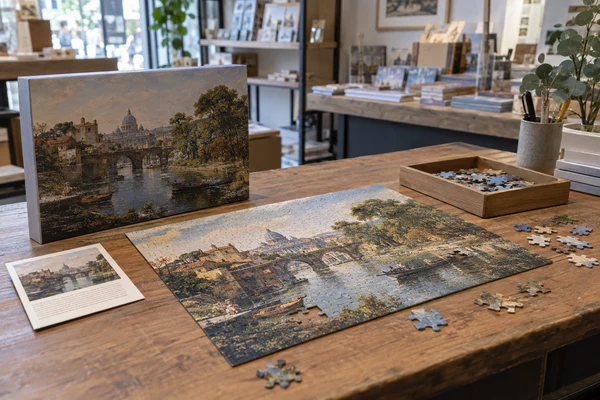
Museum puzzle development should begin with a collection-linked brief that identifies the object, authorized reproduction, interpretive purpose and approval owners. The shop needs a sellable product, while curatorial and rights teams need an accurate, respectful representation. A custom puzzle manufacturer for museums can review the physical proposal, but the museum must control collection facts, permissions and approved interpretation. This guide focuses on the handover between collection management, interpretation and retail, complementing our broader museum gift-shop sourcing article. A custom museum gift shop puzzle should carry a traceable image and story rather than a generic art description. Examples below are hypothetical. They do not imply completed museum projects, exclusive collection access or guaranteed visitor and sales outcomes.
Define the collection connection and interpretive purpose
Start with the object or collection theme the puzzle will represent. Record the museum's object identifier, preferred title and responsible curator. Describe why the image is relevant to visitors and what the product should help them notice. A detailed landscape, historical map or decorative object can invite different kinds of attention. The brief should explain that relationship without assuming every collection image is suitable for a puzzle.
Decide whether the product is tied to a temporary exhibition or an evergreen collection. The distinction affects the copy, permission period and future use. An exhibition date printed prominently on the box can make remaining stock feel time-specific; an object-focused card may remain useful longer, subject to the approved brief. Discuss that choice with retail and interpretation owners rather than treating it as a purely graphic decision.
Keep the collection connection distinct from a sales claim. A puzzle may offer another way to spend time looking at an image, but that does not prove it improves learning or visitor engagement. The broader museum gift-shop puzzle guide addresses product sourcing. Here the central question is how collection knowledge and permissions become a controlled manufacturing and shop handover.
Identify the reproduction and its rights record
The museum may own the physical object without controlling every right in the image used to reproduce it. There can be separate interests in an artwork, photograph, text and other material. Identify the exact reproduction file and its source rather than relying on a general statement that the image comes from the collection. Confirm the permitted merchandise use and any credit requirements with the responsible rights owner.
Collections Trust's rights-management procedure describes recording permissions and their scope. Use the museum's own policy and appropriate advice to resolve the particular project. Permission for an exhibition panel or website should not be assumed to cover a manufactured retail product or supplier publicity. Record the relevant agreement location so future buyers can find the decision.
Connect the permission record to the object identifier, reproduction identifier and approved use. Note any territory, duration, quantity or credit condition that actually applies. Do not invent restrictions where the permission has none, but do not leave required conditions only in an email thread. If ownership or permission is uncertain, follow the museum's escalation process before release. A manufacturing sample cannot resolve an unresolved rights question.
Separate source and use records
Collections Trust distinguishes managing reproductions from authorizing their use. Keep the master-image reference connected to the specific retail permission and proposed product. A new crop or derivative should remain traceable to its source. This allows a future reviewer to understand which image was approved and whether a proposed new use needs another decision.
Curate the image without losing collection meaning
Assess the image's suitability for assembly and interpretation together. Distinct regions can help the puzzle experience, while a crop may remove a signature, annotation or important contextual element. Ask the curator to identify details that must remain visible and details that should not be enlarged or isolated misleadingly. A retail designer should receive these constraints before producing an attractive but inappropriate crop.
Use the authorized high-quality source rather than a web preview. Collections Trust's reproduction guidance explains the relationship between original items, master reproductions and versions for different purposes. Request the version appropriate to the planned print use through the museum's image process. A file's availability does not itself authorize a new product application.
Review colour expectations and reproduction limits honestly. A puzzle print on board is a particular material representation, not the original object. Ask the factory to explain the proposed output workflow and review a suitable proof where colour is significant. Avoid promising exact fidelity or claiming that a photograph certifies conservation-grade reproduction. The curator and product buyer should agree the acceptable representation for this retail purpose.
Write interpretation and credits for the physical pack
The story card or box copy should identify the object accurately and explain its relevance in language a shop visitor can understand. Use the museum's approved title, dates, materials and attribution where appropriate. Distinguish established facts from uncertainty or interpretation. A speculative attribution should not become a definitive statement because the shorter wording looks cleaner on packaging.
Keep text proportionate to the available space and reading context. A short box panel can orient the purchaser, while a separate card can provide more explanation if included in the brief. The reference image and interpretive card serve different purposes; one supports assembly, the other supplies collection context. They can be combined only if the resulting layout remains usable and the product specification includes it.
Approve credits as carefully as the image. Check the rights holder's required wording, punctuation and placement, along with institution and photographer references where applicable. For multilingual packs, use competent reviewers familiar with collection terminology. A manufacturer can flag print-size or layout issues, but the museum's authorized reviewer must approve the content. Keep the complete final text in the release record rather than only in a design screenshot.
Check factual copy after layout
Curatorial approval of a text document does not automatically approve the typeset pack. A line break, punctuation change or abbreviated credit can alter meaning or fail a rights condition. Compare the final layout with the approved copy, including dates, qualifiers, object titles and the relationship between captions and images. Review the physical reading scale where necessary so small but important context is not effectively hidden.
Keep factual uncertainty visible in the final wording. If the collection record uses a qualified attribution, the retail designer should not remove the qualifier to shorten a panel. Ask the interpretation owner to provide an approved shorter version instead. This gives the manufacturer a stable text output and prevents a layout correction from becoming an unauthorized editorial change.
Review the collection-to-product brief
Share the authorized image status, interpretive purpose, proposed format and approval roles. We can discuss the physical product questions that need confirmation before a representative proof.
Match the product format to the image and shop role
Piece count should reflect the proposed image and purchaser context, while finished dimensions and piece size require actual confirmation. A highly detailed collection image may invite a longer assembly experience, but large uniform regions can change the challenge. Do not call a format suitable for all visitors or infer exact dimensions from a count. Ask for the actual proposed construction and cutting reference.
Compare the art puzzle reference or retail puzzle reference with the desired presentation. The museum should explain the shelf space, storage expectations and whether an interpretation card is required. Confirm the complete component list before quotations are compared, including containment and reference-image treatment.
Custom puzzles for gift shops should make their collection connection legible before purchase. Review the lid, side panel and product description for that purpose. Do not overload the puzzle face with interpretation text if it interferes with the approved artwork or assembly. If a frame or other accessory is shown in promotional imagery, clearly identify whether it is included. The shop needs an accurate offer, not a display scene that creates an unconfirmed expectation.
Use a curatorial-to-production approval matrix
Name separate owners for rights, interpretation, artwork layout, physical construction and final order release. One curator may contribute to several stages, but the responsibilities should remain visible. Identify who consolidates comments and who can approve a revision after a specialist requests a change. This prevents the supplier from receiving conflicting instructions from retail, design and collections teams.
Approve the exact crop and printed text before final output, then review the representative physical pack according to what the sample demonstrates. A visual mock-up may not represent board, finish or cut. A construction sample may not approve colour or copy. Ask the supplier to state the evidence provided by each review stage so the museum does not assume one approval covers every property.
Factory testing and shipment inspection can compare agreed physical and packing attributes against the released reference. Include the correct reproduction, interpretation card, credit text and language version in the inspection brief where applicable. These are planned buyer controls, not claims that tests have already occurred. Product or market compliance requirements need separate review by the responsible parties rather than being inferred from curatorial approval.
| Gate | Owner | Released evidence |
|---|---|---|
| Selection | Curator | Object and interpretive purpose |
| Rights | Rights manager | Permitted reproduction and conditions |
| Copy | Interpretation reviewer | Approved text and credits |
| Physical product | Retail buyer | Specification and sample reference |
| Handover | Shop data owner | Current product record |

 PuzzleZa
Prepare the shop handover with one current product record
The shop record should identify the product, approved image, pack contents, physical dimensions and interpretation source. Include identifiers needed by the retail system and actual case information once confirmed. Keep the collection object identifier available internally, even if the consumer-facing pack uses a more familiar title. This gives a future shop buyer a route back to the approved source.
Custom puzzle resale business operations need consistent ordering and receiving information, even within a museum. Distinguish individual retail packs from cartons and any fixed mixed assortment. GS1's GTIN Management Standard provides product-identification rules to review with the trading partner. A change to artwork or pack configuration should not bypass the identification and listing review simply because the collection title remains the same.
Installation preparation for the shop means checking shelf dimensions, display orientation and access to the story or reference image. Give staff approved talking points and a route for questions about collection facts. The factory overview supports supplier evaluation, while the museum's release record supports accurate retail handover. Do not expect shop staff to reconstruct rights and version history from an assortment of old emails.
Give shop staff an interpretation boundary
Staff can use a brief set of approved talking points to describe the collection connection, puzzle format and included interpretation. Identify questions that should be referred to curatorial or rights colleagues, such as disputed attribution or reuse of the image. A shop associate should not need to improvise a scholarly answer from packaging copy. Keep that referral route available in the internal product record.
Review the online description against the same factual source used for the physical pack. A retailer's shortened listing should not introduce a stronger claim than the approved story card. If another distributor sells the museum product, provide approved copy and a correction contact. The goal is consistency of representation across the shop, website and partner records, not duplication of an entire curatorial catalogue entry.
Control reorders, interpretation changes and retirement
Before a reorder, confirm that the image permission, interpretation and proposed physical specification remain current. A revised scholarly attribution or collection title can affect printed copy even when the puzzle image is unchanged. An exhibition-linked product may have different conditions from an evergreen one. Assign a review owner so the next purchasing request does not automatically reuse an outdated approval.
Keep changes traceable. Record which text, image or component changes, why it changes and who approved it. Review remaining stock and open orders according to the museum's policy and the applicable permissions. Do not silently replace an image behind the same product record or assume all old packs remain appropriate after a substantive correction. Any decision about continued use should be documented by the responsible museum owner.
For teams asking, 'how do museums create custom puzzles', the practical sequence is collection selection, reproduction and rights review, interpretation, physical briefing, approval and shop handover. Send PuzzleZa a collection-linked brief with authorized image status, proposed format and quantity scenarios. Manufacturing questions can then be reviewed against a clear institutional record rather than a general request for museum merchandise.
Frequently asked questions
Does owning an object allow us to print its image on a puzzle?
Not automatically. Rights in the object, reproduction and accompanying text can differ. Follow the museum's rights policy and confirm the permitted retail use of the exact image. Record the permission and any conditions. A supplier receiving a file cannot establish that every relevant use has been authorized.
Who should approve a museum puzzle crop?
The curator or other authorized collection reviewer should assess meaning and protected details, while the designer and factory review layout and output feasibility. Name a final consolidator and retain the exact approved crop. A technical template does not decide whether removing a contextual feature is acceptable for interpretation.
Should the interpretation be on the box or a card?
Choose the location according to reading space, pack use and the approved story. A box panel can provide concise context; a card may allow more detail if it is included in the specification. Keep the assembly reference usable. Approve all text and credits across the complete pack together.
What belongs in the museum shop handover?
Provide the released product record, approved image and copy, pack contents, dimensions, identifiers and confirmed case information. Connect the internal record to the object and reproduction references. Give staff accurate talking points and a correction contact. The shop should receive one current version rather than reconstruct approval history itself.
When does a reorder need fresh review?
Review permission status, interpretation, artwork, construction and packaging before ordering again. A changed attribution, language, image or component can require a new approval and identification review. Keep the previous release traceable but do not assume it remains current indefinitely. The responsible museum owner should authorize the new release.
Conclusion
Museum puzzle briefs succeed when collection knowledge, rights and retail requirements remain connected through a controlled record. Select an appropriate authorized reproduction, preserve meaning through the crop and interpretation, and approve the complete physical pack. Then give the shop a current product record and a clear revision route. This makes the collection connection credible without turning manufacturing into an unverified claim of cultural or commercial impact.
Prepare a museum shop handover brief
Send the collection reference, approved text status, intended markets and quantity scenarios. PuzzleZa can review the manufacturing scope while your curatorial and rights owners retain institutional approval.
Sources and scope
Sources reviewed on 2026-10-09. Manufacturing examples and review checklists are planning guidance, not claims about completed customer projects or guaranteed results. AI-generated images illustrate the topic and do not document an actual inspection.
- Collections Trust: rights-management procedure — Record permissions, scope and the distinction between object and reproduction rights.
- Collections Trust: reproduction scope — Connect source objects, master reproductions and purpose-specific versions.
- GS1: GTIN Management Standard — Review product identification as the retail item changes.