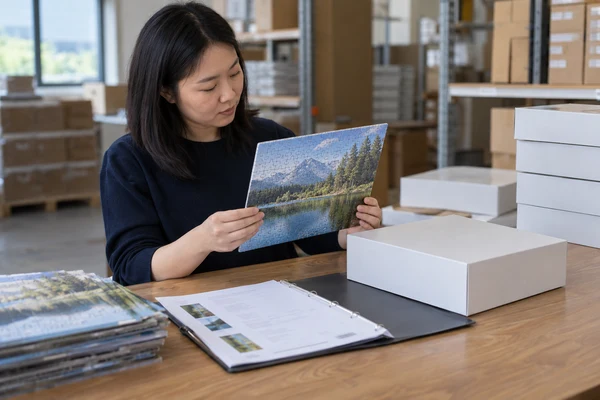
What should be in a custom puzzle purchase order? Include a product identifier, specification revision, artwork versions, components, quantities, current quotation reference, approval conditions, inspection scope and defined delivery handover. For a reorder, explicitly state whether each item remains unchanged or has been revised. An instruction such as repeat the last shipment leaves too much unresolved when packaging, stock materials or files have moved on. This guide is for procurement and operations teams that want a repeatable product record and a clear change process. It explains how to connect the purchase order to physical references and production evidence without treating an old sample or price as permanently valid.
Build a baseline before issuing the next order
A reorder begins with a baseline describing what was actually approved and delivered. Collect the final specification, print files, component list, retained sample reference, packing diagram and shipment observations. Early quotation files or development prototypes may not match the released product. Identify their status before using them as instructions for another production run.
Give each product a stable internal identifier and each released configuration a revision. The identifier should help teams recognise the sellable item; the revision should explain which technical definition applies. Retain thumbnails alongside codes when artworks look similar. A warehouse worker and a designer may use different image names, but both can compare the same product reference.
Review discrepancies from the first order. An accepted box substitution, an omitted insert or a changed carton count belongs in the baseline if it formed part of the authorised final configuration. If the decision was temporary, record that explicitly. Otherwise a one-time concession can become an unintended standard when a new employee copies the previous order.
Start from the current product you intend to replenish, such as the 500-piece retail puzzle format. Confirm the particular artwork, dimensions and pack selected for your programme. A product-family page provides direction, but the order needs the project's approved configuration rather than a generic format description.
What should be in a custom puzzle purchase order?
The purchase order should connect commercial instructions to a controlled technical record. Include buyer and supplier identities, order number, product codes, revision, quantities by SKU, quotation reference and delivery basis. List the approved specification and artwork attachments by filename and version. State which document governs if an attachment and a typed order line conflict.
For the product, identify finished size, piece count, board reference, face paper, finish, cut reference and any special presentation requirement. For the pack, identify bag or containment, retail box, poster, guide and other inserts. Include carton count or packing configuration where relevant. Avoid adding unsupported tolerances; use measurements and review methods agreed during development.
For execution, name the approval owner and release conditions. State whether a new sample is required, which factory testing checks apply and how shipment inspection will be arranged. Identify information the supplier must submit before freight handover. Keep requested dates separate from confirmed commitments, and record the decision when the parties agree to a revised schedule.
Our sample approval guide explains the physical review. A purchase order should reference its resulting approval record rather than repeating a broad phrase such as sample approved. Include the sample identifier, approval date, approved exceptions and any attributes the sample did not represent, so the next run inherits the correct boundaries.
| Record | Required decision | Useful attachment |
|---|---|---|
| Product | Which SKU and specification revision? | Released specification and thumbnail |
| Files | Which puzzle, box and insert versions? | File manifest and approvals |
| Commercial scope | What price basis and exclusions apply? | Current accepted quotation |
| Changes | Which differences were authorised? | Change log and revised references |
| Release | Who approves production and shipment? | Sample and inspection conditions |
Compare the current quotation with the released scope
A custom puzzle supplier quotation should be evaluated against the exact configuration you want to reorder. Check whether it covers the same board, finishing, components, packing count and delivery basis as the baseline. Ask the supplier to list assumptions and exclusions. A lower figure may reflect a smaller scope; a higher figure may include work absent from the original order.
Separate recurring manufacturing charges from sampling, development, tooling and project-specific services. A custom puzzle manufacturing quote may use a different cost structure when the quantity mix changes. Ask whether shared components and distinct artwork are treated separately. Do not assume that several SKUs combine into one production quantity merely because they use a common box size.
Check validity, currency, quantity basis and payment conditions in the current record. A custom puzzle factory quote from an earlier season is evidence of the previous arrangement, not proof that today's terms remain the same. Preserve it for comparison, then identify the quotation both parties accept for this order. Any negotiated adjustment should become a clear revision.
If you receive a custom puzzle wholesale quote for a range, map each line to the appropriate product and component revision. Confirm whether the supplier is quoting a finished retail unit, a component set or another scope. Unknown values should remain visibly unresolved until answered; an optimistic estimate inserted by procurement can otherwise become a misleading instruction for production.
Make your reorder scope clear
Send the previous product reference, proposed quantities and a list of intended changes. Include current artwork and packaging requirements for a comparable quotation.
Keep files and approvals connected
File control should explain both content and status. Use a manifest identifying puzzle artwork, box panels, reference image and printed inserts. Include revision and approved output format, then mark superseded material. The latest timestamp is not proof of approval. A file may be a designer's working correction, a printer's technical adjustment or the authorised production output.
The Adobe InDesign packaging guidance describes gathering documents, linked graphics, fonts and a report, with preflight before handover. This supports a complete asset package when that workflow is used. Follow the factory's requested output instructions and permitted font transfer; do not assume an editable document alone contains every required asset.
Link each approval to the exact reviewed output. If a buyer approves a PDF and the factory makes a technical adjustment afterward, identify whether that adjustment needs another review. Record its scope and decision. A changed QR destination, product warning or translated statement can matter even when the overall image appears unchanged, so content owners should see affected outputs.
Archive approved references where the people preparing the next order can find them. Include readable previews as well as technical files, but prevent previews from being mistaken for production artwork. The point is not a complicated software system. A small team can maintain reliable control with one release folder, a manifest and a documented approval process used consistently.
Name revisions for humans as well as systems
A hypothetical manifest might list puzzle-face R03, retail-box R04 and reference-card R02 under one product release. These are illustrative identifiers, not a prescribed numbering standard. Add a short description explaining each change. That makes it easier to discover a mismatched reference card than a folder of nearly identical files named final, final-new and final-approved.
Distinguish an exact repeat from an approved change
Classify the order before release. An exact repeat uses the approved configuration with no intended product change. A controlled revision changes identified elements while retaining other references. A new variant introduces an additional sellable option. The classification helps determine what must be sampled, what receiving records need updating and whether product listings still describe the physical item accurately.
An apparently small adjustment can affect several components. A different finished size may alter crop, cut, box fit and carton data. A translated insert may change layout and folding. A revised box may affect shelf dimensions or mailer fit. Ask the supplier to identify dependencies before accepting a cost or schedule change, and obtain the affected team's approval.
For trade-item identification, consult the GS1 GTIN Management Standard. It sets decision rules for changes such as brand, pack quantity and dimensions. An internal revision and a GTIN serve different purposes. Review the applicable rule and retailer requirements rather than assuming that every technical revision requires a new code or that none does.
Create a change request with old and proposed states, reason, affected components, reviewers and disposition. Preserve rejected proposals as well as accepted ones where they explain a decision. If production has already begun, ask which goods are affected before agreeing to implementation. A change should not enter the order simply because someone circulated a replacement attachment in an email thread.
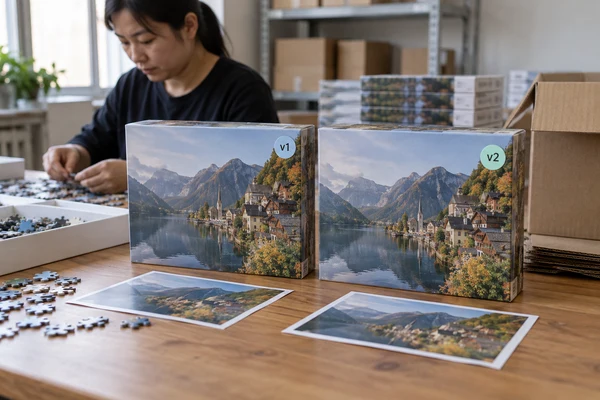
 PuzzleZa
Make material and component substitutions visible
Ask the supplier to notify you before substituting a specified material or component. A board described as equivalent may differ in feel, colour, rigidity or cutting behaviour. A new bag closure may change how customers return pieces to the box. Evaluate the characteristics relevant to the approved product instead of accepting or rejecting a substitution solely on its name.
Request a comparison that identifies what changes and why. Use samples or documented specifications appropriate to the decision, and state which reviewers approve the proposed replacement. Commercial acceptance should include any required updates to artwork, product descriptions or packaging evidence. Avoid allowing a temporary shortage decision to silently become the material reference for every future order.
Keep the retained sample useful by recording its revision and condition. Paperboard and packaging can change during storage, so an old sample is a comparison reference rather than an unchanging laboratory standard. If the reference is worn, damaged or incomplete, arrange a current representative review. Photographs help recognition, but they do not replace physical evidence for handling or construction questions.
Use a custom puzzle supplier checklist to capture open substitution questions before release. Ask whether board, paper, coating, cut tooling, containment, box structure or insert stock differs from the baseline. Require a clear response for relevant items. This checklist supports a discussion; it should not be interpreted as proof that every material has been independently tested or certified.
Connect factory checks, inspection and receiving
Factory testing should compare selected production units with the released product definition. Relevant checks may include artwork version, piece separation, component presence, bag closure and box fit. Define the scope in the order. A reorder should not receive less clear instructions simply because the product looks familiar; version errors often remain visually subtle until the package is opened.
At shipment inspection, provide the inspector with the same specification, sample reference and approved change log. Check selected finished packs and cartons against those records, including assortment and agreed marks. Document observations and authorised exceptions. If an unresolved issue affects release, identify the decision owner and required corrective evidence rather than relying on a generic shipment-ready message.
Prepare the warehouse with product identifiers, carton data and revision information it actually needs. A change in box dimensions or assortment can affect receiving locations and picking instructions. Include a clear distinction between old inventory and the new shipment when that matters. The warehouse should not have to infer from similar artwork which version procurement intended to buy.
Shopify's SKU guidance recommends unique identifiers for products and variants. The practical lesson applies beyond that platform: connect the physical item to inventory records consistently. Coordinate internal codes, trade-item identifiers and location records with the systems your sales and fulfilment partners actually use, rather than inventing a new code only for the factory.
Close the reorder with a usable feedback record
After receiving, record what the team observed and distinguish product issues from distribution or fulfilment issues. A bent insert, an incorrect SKU pick and an outer-carton dent call for different investigations. Use photographs, identifiers and shipment references where available. Avoid attributing every customer report to manufacturing before the responsible team has checked the evidence and handling sequence.
Turn recurring observations into specific proposed improvements. If customers struggle to refold a poster, review the poster dimensions and fold arrangement. If staff confuse editions, review identifiers and receiving instructions. Do not add stronger quality language to hide an operational problem. A useful change record explains the cause being investigated, proposed action and how the next sample will be reviewed.
At the end of the order, update the baseline to the actual authorised configuration. Preserve commercial terms separately from technical references so an old price does not become a permanent specification assumption. Record who holds the retained sample and who owns the next review. This allows a new buyer or employee to continue the programme without reconstructing decisions from scattered messages.
PuzzleZa operates an 8,000 m² custom puzzle factory in Shenzhen. Use the factory information as context and send the current specification and reorder changes for discussion. A concise, complete release record helps both parties identify the intended scope and ask useful questions before another manufacturing run begins.
Frequently asked questions
Can we reorder by sending the previous purchase-order number?
Use the previous number as a reference, but also identify the product revision and confirm what remains unchanged. Check current materials, artwork, components, quotation and delivery requirements. If the earlier shipment included temporary exceptions, state whether they apply again. The new order should define its own approved scope clearly.
Does every artwork correction need a new SKU?
Not necessarily. Internal revision control, SKU practice and GTIN allocation are different decisions. Record every approved correction, then review whether customers or trading partners need to distinguish the changed item. Consult the relevant GS1 rule and your retail systems before reusing or replacing a trade-item identifier.
Should an exact repeat always require another full sample?
The review depends on changes and risks. Confirm whether materials, tooling, files and packing remain equivalent, then agree what evidence is needed. A full sample may be appropriate for a changed configuration; other documented checks may suit a controlled repeat. Do not assume either approach without reviewing the actual order.
What if the factory proposes an equivalent board?
Ask for the material reference, reason and relevant comparison evidence. Review characteristics that matter to your product, such as handling, print appearance, cut and pack fit. Approve or reject the substitution through the change process, and update affected records if accepted. The word equivalent alone does not define your requirements.
Which document should take priority when instructions conflict?
Agree a document hierarchy with the supplier before release and identify the governing specification revision. Resolve conflicts between quotation, order lines, artwork and sample notes explicitly. Do not rely on whichever attachment was sent most recently. The responsible approver should issue a clear correction and preserve the superseded instruction.
Conclusion
The answer to what should be in a custom puzzle purchase order is a connected set of commercial and technical references. Define the current product, accepted quotation, approval conditions and authorised changes. Keep that record aligned with factory testing, shipment inspection and receiving, then use actual feedback to improve the next reorder deliberately.
Request a current reorder quotation
Contact info@PuzzleZa.com with your released specification and required delivery handover. PuzzleZa can discuss the order scope and any details needing renewed approval.
Sources and scope
Sources reviewed on 2026-09-28. Manufacturing examples and review checklists are planning guidance, not claims about completed customer projects or guaranteed results. AI-generated images illustrate the topic and do not document an actual inspection.
- Adobe: package InDesign files for output — Complete document, linked asset and font handover with preflight.
- GS1: GTIN Management Standard — Reviewing trade-item identification when product attributes change.
- Shopify: using SKUs to manage inventory — Unique product and variant identifiers in an inventory system.