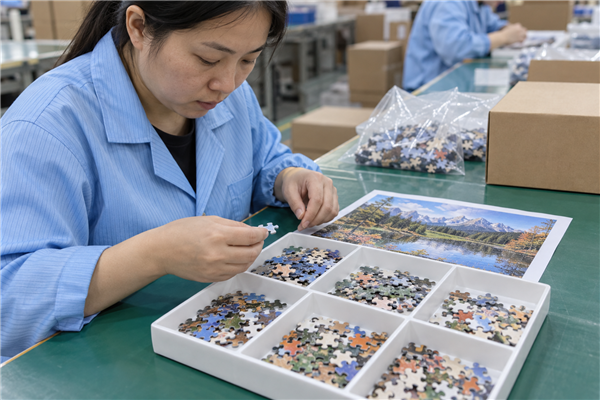
A missing-piece complaint is best managed long before it reaches customer service. Brands can reduce preventable issues by defining a controlled product record, testing the packing process, checking selected finished units and retaining a traceable order record. A custom puzzle missing piece replacement plan should be realistic about what can be supplied and how a customer report is identified; it should not promise a remedy the factory, retailer or inventory system cannot support.
Start with a decision-ready project brief
Start with the approved puzzle, board, cut, artwork, bag, box, SKU and carton plan. State whether the product is an open retail range, a limited edition or a personalized order, because that changes the practical replacement route. A custom puzzle missing pieces check should be connected to the actual production and packing flow, not added as an abstract promise after the product is on sale. The buyer should own its customer policy and give the factory clear requirements for product and packing controls.
A practical brief also makes comparisons fair. Give potential suppliers the same core information and ask them to identify assumptions rather than silently filling gaps. This keeps commercial choices visible: which part of the specification creates customer value, which detail is driven by the sales channel, and which item needs a decision from your team. It also gives the factory a usable starting point for installation preparation, prepress review and packing planning.
What a buyer should define before requesting a quote
- Target customer, sales channel, destination market and launch milestone.
- Quantity scenario, finished size, proposed piece count and product application.
- Artwork status, ownership or licensing position, and every planned printed component.
- Packaging direction, inserts, barcode or label needs, and any retailer routing requirements.
- Sample approvers, required factory testing, shipment inspection and freight handover owner.
Buyer checkpoints for this decision
- The product version, components and packing configuration are controlled in one release record.
- The sample establishes a practical standard for factory testing.
- Shipment inspection checks selected packs and cartons against the approved order record.
- The brand defines its customer-service and replacement path before launch.
A puzzle-piece count, a component check and a customer replacement policy are not the same control. State which physical checks are planned for the order and which after-sales process the responsible seller will operate.
Choose the product around the customer experience
Separate prevention from service. Custom puzzle count verification, component containment and version control can reduce factory-side risks. A custom puzzle replacement policy describes what the seller will do if a customer reports an issue. These are related but different systems. Do not advertise a custom puzzle warranty or replacement promise without confirming who owns customer contact, proof of purchase, inventory, regional delivery and the availability of the exact product version.
When comparing options, ask what changes for the person who receives the product. A specification should have a visible reason: perhaps it protects detailed art, makes an educational activity clearer, supports a gift-worthy unboxing sequence or fits a retailer's shelf. This discipline prevents a common sourcing error in which individual choices look attractive on their own but do not form a coherent customer experience when packed together.
It is also useful to make trade-offs explicit. A more complex format may affect development work, component control or logistics. A simplified pack may improve fulfilment but leave less room for story content. Neither result is inherently right or wrong. The value of a B2B manufacturer conversation is that product, creative and operational implications can be reviewed together while the option is still affordable to change.
Common sourcing risk to avoid
Do not promise single-piece replacement, warranty coverage or universal remedies unless the product version, inventory and service process actually support them. Personalized, seasonal and limited products may require a different plan.
Build prevention into the product record
Use one controlled record for the approved product: SKU, piece count, finished size, artwork version, board, cut, bag, box and components. This enables factory, warehouse and seller teams to identify the product accurately. A visually similar box or an old artwork file is not a reliable substitute for a controlled version.
Check the physical pack during sampling. Open the box, inspect bag closure and components, assemble a small area and return the pieces to the pack. Record observations that the factory can use during testing. The aim is to identify an incorrect configuration or pack sequence before the same issue is repeated in production.
Avoid overclaiming. A documented check can improve traceability and reduce preventable errors, but cannot guarantee that every unit will be free from every possible issue. Customer-facing quality language should reflect the actual controls and service capability.
Plan factory testing and shipment inspection
Factory testing should compare selected units with the approved sample for artwork, board, cut, piece separation, bag, components and box. The details checked should be appropriate to the specific product and be documented in the order record rather than implied by a broad quality label.
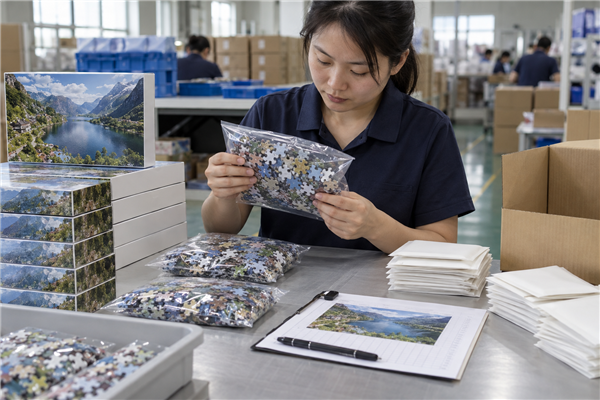
At shipment inspection, compare selected finished packs and cartons with the same reference. Check product version, component presence, visible pack condition, carton count, protection and outer marks before freight handover. Record any exception and the decision taken, so the buyer has an evidence-based release history.
Keep carton data, inspection notes and final approved references with the purchase order. These records help receiving teams and customer service trace a report to a specific product version and shipment.
Design an honest after-sales path
The responsible brand should define how a customer reports a missing-piece concern, which purchase or product information is needed, who investigates it and what remedy is available. Match the policy to inventory and product type. A standard open-edition SKU may be supported differently from a custom photo product or a time-limited campaign edition.
If replacement components or complete units are part of the plan, confirm the inventory, identifiers and communication path before launch. A factory may manufacture to a future order, but should not be assumed to hold service inventory or handle a brand's customer claims unless that arrangement is explicitly documented.
Review after-sales observations after launch. Recurring reports may point to a packaging, version-control or fulfillment issue that the brand can correct in the next production brief. This feedback loop is more useful than making a broad warranty statement without operational support.
 PuzzleZa
Use the sample as evidence, not as a formality
A pre-production sample should establish the reference for board, cut, bag, box and included components. During factory testing, selected units can be checked against that reference for print, cut, separation, components and bag closure. Shipment inspection should compare selected finished packs and cartons with the approved release record before freight handover. These checks are practical controls for an order; they do not prove that no future customer issue can occur.
Bring the relevant teams into the review in the right order. Creative reviewers can confirm image, copy and visual hierarchy. Product and purchasing teams can check material, components and the commercial specification. Operations teams can review carton information, receiving limits and delivery readiness. Consolidate their feedback into one documented response so the factory receives a clear decision rather than conflicting comments from separate email threads.
The approved sample should answer a practical question for everyone involved: is this the product we are prepared to reproduce, pack, inspect and deliver?
Version control matters at this point. Reference the exact artwork, packaging and component versions in the sample-approval record. If a revision is needed, identify what changed, why it changed and whether another physical sample is necessary. This is not administrative overhead; it is the evidence quality and production teams use later when a project contains several files, SKUs or market versions.
Send Your Requirements
Share the product idea, quantity, artwork status and destination. We will help turn them into a practical custom puzzle brief.
Plan quality control, packing and delivery together
Keep a release record with the SKU, approved files, sample, component list, carton configuration, inspection observations and shipment handover details. If a retailer receives a report later, that record helps identify the product version and investigate the issue. For receiving preparation, share the correct SKU and carton information with the warehouse. A clear order checklist improves traceability without creating a claim that every unit has been individually opened or counted.
For the factory, an inspection plan is most useful when it focuses on the details that define your product: correct artwork and pack version, print appearance, die-cut or component checks where relevant, bagging, inserts and carton marks. For the buyer, that same plan makes shipment inspection easier to interpret because the inspector can compare selected finished units with a known approval reference. It also gives freight teams a more reliable handover point.
Keep a final release file with the approved specification, production contact, inspection observations, carton information and agreed shipment documents. This supports a smoother first delivery and becomes valuable information for replenishment. The goal is not to eliminate every uncertainty in a custom product. It is to resolve the important ones at the stage where a correction is still manageable.
Apply the guide to your next puzzle project
This guide is useful for private-label teams, online retailers, publishers and distributors that want a more controlled quality and after-sales handover for custom puzzle products.
Use this article as a working conversation tool. Share it with the people who own artwork, purchasing, product compliance and freight, then collect the unanswered questions before a quote is requested. A precise enquiry helps a factory respond with relevant options and helps your internal team distinguish confirmed requirements from preferences that still need a decision.
For material and sourcing context, see GS1 guidance on product identification, FSC responsible forestry information. For project-specific manufacturing support, explore our custom puzzle formats, Shenzhen factory capability and production process.
FAQ
How can a brand reduce missing-piece complaints for custom puzzles?
Use a controlled product record, approve a physical sample, define appropriate factory and shipment checks, protect packs in transit and retain traceable SKU and carton records.
Can a factory guarantee that no puzzle will have a missing piece?
A factory can carry out agreed controls, but a blanket guarantee is not a practical substitute for a defined quality plan and customer-service process. Describe the actual controls honestly.
Should a brand offer custom puzzle piece replacement?
Decide based on the product version, inventory, customer channel and service capability. Document the policy before launch rather than promising a remedy that cannot be delivered.
What should shipment inspection cover for puzzle packs?
Compare selected finished packs and cartons with the approved product and packing record for correct version, components, visible condition, count, protection and required marks.
Conclusion
A successful quality-controlled custom puzzle program begins with a defined customer outcome and ends with an approved, inspection-ready pack. Align the brief, sample, quality checks and delivery plan early; it gives your team a better basis for an accurate quote and a more dependable first shipment.
Get a Quote